
Hidden Glory
Two spelunkers kept Kartchner Caverns a secret for decades. Thank goodness they did.
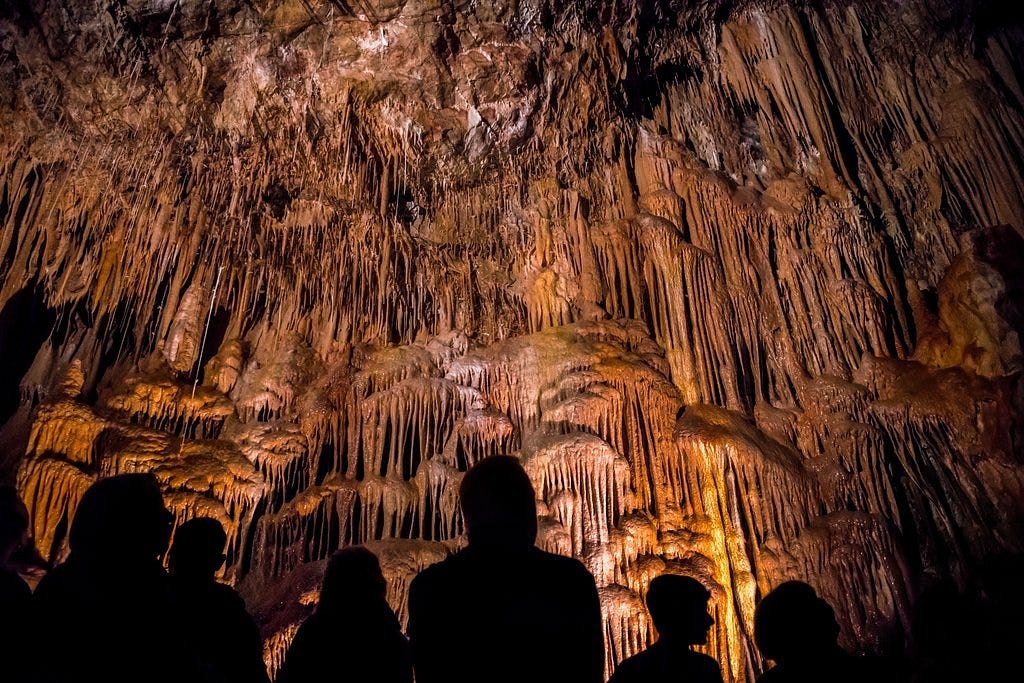
As I drop into the bowels of the earth, one thought keeps percolating through my mind: How did two passionate young spelunkers keep this glorious place, now known as Kartchner Caverns, under their collective hats for some 14 years, until its protection could be assured?
Back in 1974, college roommates Gary Tenen and Randy Tufts were exploring the desert southwest of Tucson when they came upon a mysterious sinkhole. Slipping down through it, they came upon a vast living cave with a remarkable array of formations, from the world’s longest “soda straw” formation hanging down 21 feet from the ceiling, and Arizona’s highest column towering at 58 feet.
More than five decades later, I’m ensconced in the soul of their discovery, along with 10 other visitors and our amiable tour guide. We all gasp when we enter the Throne Room, with its “bacon draperies” that glisten from above, nestled between skinny white helecites squeezed like Play-Doh worms from slight rock fissures, and splash of colors ranging from orange and white to crimson.
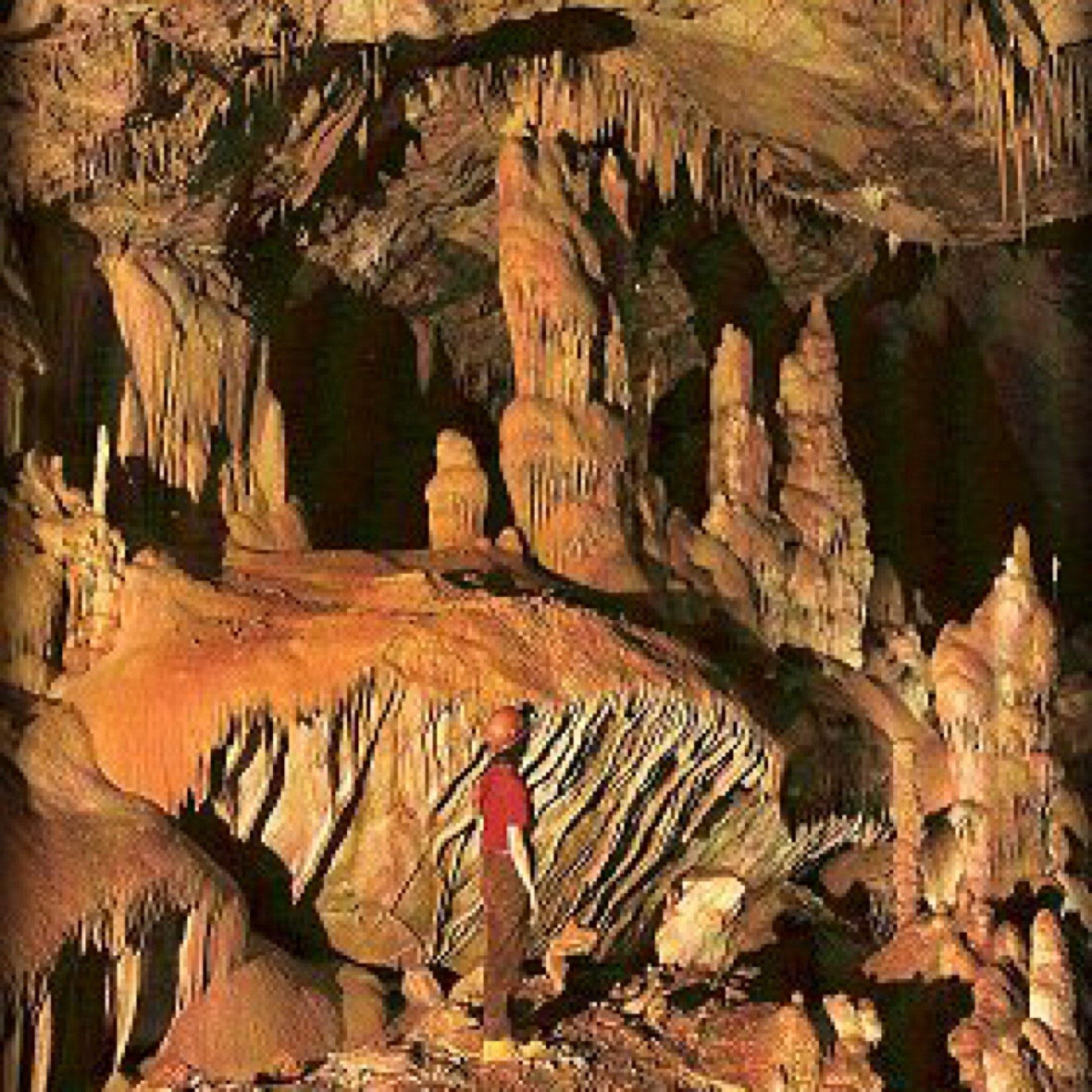
Our guide, Terry, has long been entranced by this splendor, though she worked as a volunteer in the cave’s visitor center for before finally overcoming her slight claustrophobia and venturing into the cave’s inner sanctum.
Now she goes in whenever she can. “Its beautiful,” she whispers to me, as we walk along a low-lit path. “The first 10 times I came in here I went out in tears. It’s very spiritual.”
It’s also the hugely significant result of an inland sea that existed her 320 million years ago, leaving immense limestone deposits beneath what would eventually become the Whetstone Mountains. As the highly acidic waters receded, they left behind enormous rooms etched from the limestone.
They also left damp conditions necessary for the creation of incredible stalagmites and stalactites—the so called “dripstones” formed from mineral-laded water droplets seeping through faults in the earth.
The result is a masterpiece more than 70,000 years old and still underway. Consider that the hollow, calcite “soda straws” grow only about an inch every 100 years. Or that stalagmites rising from the cave floor only add an inch each millennia.
Today, this grand cave is encompassed by Kartchner Caverns State Park—which includes a sweet campground with roughly 60 sites—and is flanked by a sparkling gift shop and the intriguing Discovery Center with dioramas and exhibits detailing the subterranean treasure. But the true jewels lie underground. They include the spectacular Rotunda and Throne rooms, and the damp mud bog, more than 20 foot deep, dissected by a narrow trail disappearing into the distance.


That path was first blazed by Tufts and Tenen in their early explorations.
“Our two discoverers, when they went down there, were so excited to see the beauty that they turned off their carbide lamps and started giggling,” Terry tells the group. “It’s every caver’s dream to find a cave that no one has been in before.”
With help from The Nature Conservancy, land above the cave was eventually purchased from the prominent Kartchner family, and transferred to Arizona State Parks. It opened to the public in 2003, upon completion of a painstaking, $36 million development that allowed visitors in, but also protected the cave’s fragile, damp climate. The final design included an elaborate series of “conservation” doors, reminiscent of a walk-in cooler. “They keep the desert out,” says Wangsness, “and keep things nice and humid inside. If these doors were to stay open, within a short amount of time the whole cave would dry out.”
Instead, it remains a dynamic of world of weird shapes, a place where water constantly drips from some 60 faults, and remains the genesis of all the wonders spreading before us. We pass by 40,00-year-old bat guana, and an auburn slab of “bacon,” before ending up on concrete risers, staring out at the abyss. Before us stands that massive column, appropriately dubbed Kublai Khan. An orchestrated but perfectly low-key light show begins, set against passionate vocals and orchestration. It is a perfect moment.
Later, back in the sunlight, I ask a Phoenix attorney named Robert for his thoughts on the cave. “Breathtaking,” he says. “I could just sit and stare at it all day.”
“You have to see it and feel it in person,” says his wife, Hester. “It’s outstanding. A treasure.”
I guess millennia of the earth’s artwork would compel me to agree.
Check out more of my work at tmvanderpool.com

Very interesting and new to me. Many years ago I went down into Mammoth Cave in KY and was underwhelmed. This cave seems, from your description, to be spectacular in comparison.